
The electrical circuits in your home power all of your appliances and to ensure everything works as it should each socket, light and switch has to be wired up using the right type and size of cable.
To learn about all the different sized electrical cables that are used in your home and how they should be used, read on below.
Why are There Different Sized Electrical Cables?
The electrical cables used to power the lights and appliances in your home come in several different cable sizes, primarily to accommodate the amount of current required to run the items that are drawing power from it.
All cables are rated to carry a specific amperage meaning that the load imposed on them should be no more than they are able to safely carry. If this is ignored there’s a chance the cable could get hot and catch fire!
This can be further complicated by the location in which they will be installed and how effectively a given cable will be able to disperse heat e.g. a cable installed in an empty stud wall will dissipate heat much easier than a cable in a loft that buried under 200mm of insulation, so this needs to be considered also.
With this in mind, ultimately it is the appliances or items that will draw power from the circuit they are powered from and the location in which cables will run that decides on the size of cable required.
What Size Cables for Lighting Circuits?
The Cable sizes for domestic lighting circuits is usually 1mm or 1.5mm twin and earth cable (aka two core and earth). In most cases 1mm should be fine but depends on how many lights are on the circuit and how long the cable run is. If quite a few are required or the cable run is over a long distance, then 1.5mm cable should be used to cope with supply demand and voltage drop.
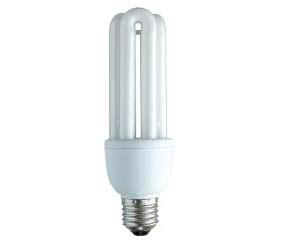
Lighting is usually fed by a 1mm or 1.5mm cable
What Size Cables for Sockets?
In most domestic situations the cable size used for sockets on a ring main or radial main is 2.5mm twin and earth cable.
The size of cable used for sockets needs to be larger than that used for lighting circuits because it will have to cope with more load due to the number of different appliances with different power supply needs that could potentially be plugged in to the circuit.
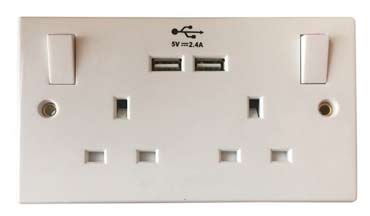
Standard double socket as seen in many homes across the country. This one features an in-built USB port
What About Other Cable Sizes?
Aside from the 3 most commonly used cable sizes of 1, 1.5 and 2.5mm twin and earth there are in fact numerous other larger sizes of cable that include 4mm, 6mm, 10mm and 16mm. These are mostly used for appliances and objects that require much more electrical power to operate or special use situations. Even larger sizes of cable include 25, 35, 50, 70,95, 120, 150 all the way up to 1000 square mm, over 20 different sizes in total, but anything above 16mm is generally just for industrial use.
The situations in which you would use a larger cable size really depends. As mentioned, appliances such as electric power showers, large cookers, electric car chargers etc. will all draw larger amounts of current so will generally require a larger size cable to supply the required current and prevent too much current being drawn which can cause overheating and the potential for the cable to catch fire!
A larger size cable may also be used in situations where an electric supply needs to be run over a long distance. Using the incorrect size cable in this case may cause a large amperage drop resulting in not enough electrical power actually making it to the end of the cable to actually power the item.
What About the Size of the Earth Wire?
The cross sectional area of the earth wire in a 1.5mm cable is 1mm and in a 2.5mm cable it is 1.5mm.
This should be sufficient for most domestic socket and lighting circuits.
What Does 1.5mm or 2.5mm Cable Mean?
1.5mm and 2.5mm is the cross sectional area of the individual live or neutral wires in the 1.5mm or 2.5mm cable. This is not the combined cross sectional area. Each one of the live and neutral wires has a cross sectional area of 1.5mm or 2.5mm.
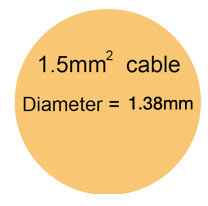
1.5mm cable means a cross sectional area of 1.5mm of the live or neutral wire
If you snip one of the wires and look at it face down you will see it’s cross section. Obviously this is a circle. The area, or cross sectional area of this circle is 1.5 mm square or 2.5 mm square.
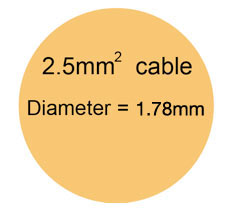
2.5mm cable means a cross sectional area of 2.5mm of the live or neutral wire
This cross sectional area, or in more simple terms the area of the exposed face of the wire, does not include the insulation around it. It is purely the area of the copper wire.
How do I Calculate the Diameter of the Wire and Determine Cable Sizes?
As we have established above, how you identify electrical cable size is through the size of wire it houses e.g. 1.5mm cable houses 1.5mm wire.
In most instances, the size of cable should be printed on the sheath, but if not you will need to calculate the diameter of the wire to determine its size, which means working out the area of a circle e.g. the circular piece of wire.
To calculate the area of a circle multiply the radius (half the circle diameter) by itself to get the radius squared. This is then multiplied by Pi (Π) which is approximately 3.142. This calculation is written as shown in the image below.
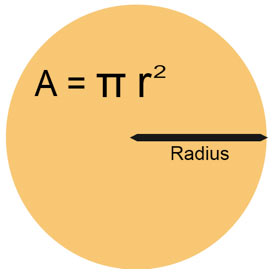
Pi times the radius squared is the area of a circle
To calculate the diameter of the wire when knowing only the area, the equation has to be done backwards.
The area is divided by 3.142 (Π) and the square root (√) of the answer is the radius (r). Multiply the radius by 2 and you have the diameter.
Why are Different Cables and Flexes Used for Different Things?
Different cables and flexes are used for different jobs because they are thicker and can carry more current and have more, or less resistance.
Resistance can be thought of as electrical friction and the wires in the cable or flex will absorb some of the energy in the current, allowing a little less to reach the target than was sent.
High energy users such as electric showers, cookers and immersion heaters are supplied by thicker wires than (for example) a radio as the current that the appliance needs is considerably greater.
Cables supplying circuits should be sized as per the following cable ratings table below.
The methods mentioned in the table below are methods for how the cable runs through the home to carry the power from the consumer unit to the outlet.
Cookers require high amperage as they use lots of power
Please note again that installation of cables depends on the location they are to be installed in.
Also taken into consideration is the temperature of the area or void, the length of the cable run, the grouping of the points they serve and the type of device (Fuse, RCD etc.) by which they are protected.
It is vital to remember that values for cables and flexes can change in domestic situations. A cable in an insulated loft space will get hotter, much more quickly, than a cable looped through garage rafters. The suggested load it can carry is then less. Loading a cable with too many amps makes it hot, and hot cables are dangerous.
The Institute of Engineering and Technology (IET), formerly the Institute of Electrical Engineers (IEE) have decreed that cables can carry loads (measured in amps) according to not just their size, but according to the methods they are fixed (or otherwise) to any given surface. These methods are described below.
As with most formulas in the building trade there are regulations defining specific boundaries for the use of all materials. Factors such as resistance and voltage drop may need to be assessed and taken into consideration when working out cable runs.
The cable current rating for different fixing methods table below shows the methods by which cables are employed in a domestic dwelling and the permissible voltage drop via that cable and that particular method.

IET – Institute of Engineering and Technology
Cable Ratings and Locations From On Site Guide to BS7671:2018
Note: The following information and regulations are specific to England and Wales.
We have abstracted a couple of the most popular tables for current rating of cables below. The rest, and the full table follows.
The first table below is for cables which are installed by Method 103 “Surrounded by thermal insulation including in a stud wall with thermal insulation with cable not touching the wall”.
The second table is for cables installed by Method C, "clipped direct". As you can see there is quite a difference in rating so be absolutely sure you are doing the right thing.
Also remember that while it is not an offence to make electrical installations yourself, it is an offence to use them without them having been checked by a qualified electrician.
Even a simple socket addition now has to have a minor works certificate!
The IET produce the On Site Guide and its updates, the current on being BS7671:2018 (updates are published between major releases) and cable sizes are noted, together with where they can go and which current they can carry.
The mixture of these two things is called a Method and there are 7 methods, they are as follows:
- Method A – Enclosed in conduit in an insulated wall
- Method B – Enclosed in conduit or trunking on a wall
- Method C – Clipped direct
- Method 100 – Above a plasterboard ceiling covered by thermal insulation not exceeding 100mm
- Method 101 – Above a plasterboard ceiling covered by thermal insulation exceeding 100mm in thickness
- Method 102 – In a stud wall with thermal insulation with cable touching inner walls surface
- Method 103 – In a stud wall with thermal insulation with cable not touching the inner wall surface
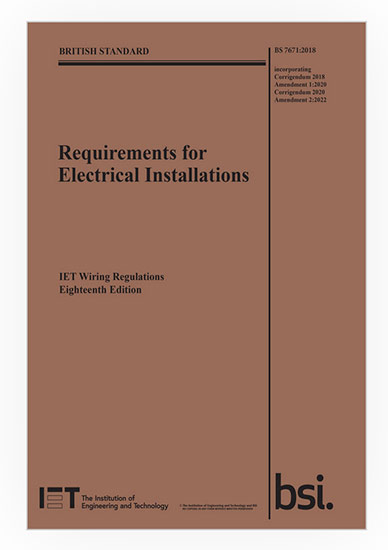
IET On Site Guide to wiring regulations 18th Edition – 18th Edition Regulations available to purchase here
Your house insurance may not be valid if you do not comply with the regulations as you have a duty of care to protect anyone who enters your home.
Cable Size Ratings Tables in Amps
Table 1 – Method 103: Surrounded by thermal insulation including in a stud wall with thermal insulation with cable not touching the wall.
| Cable size | Rating in Amps |
| 1mm | 8 |
| 1.5mm | 10 |
| 2.5mm | 13.5 |
| 4.00mm | 17.5 |
| 6.00mm | 23.5 |
| 10.00mm | 32 |
Table 2 – Method C: Clipped Direct
| Cable size | Rating in Amps |
| 1mm | 16 |
| 1.5mm | 20 |
| 2.5mm | 27 |
| 4mm | 37 |
| 6mm | 47 |
| 10mm | 64 |
Once again please check and double check that you are sure about what you are doing. It is an offence to install unchecked wiring and your house insurance may not be valid if you do.
Full Cable Ratings and Methods
Here follows the cable rating in amps and cable size for each fixing method as defined in the onsite guide mentioned above.
The information below has been taken from Table F6 – table 4D5 from BS 7671:2018 On Site Guide Appendix F
Installation reference methods and cable ratings for 70°C thermoplastic (PVC) insulated and sheathed flat cable with protective conductor.
(Scroll table right for full info)
| Conductor Size (cable size) | |||||||
| Installer Description and Reference Method | 1.0mm2 (CS) | 1.5mm2 (CS) | 2.5mm2 (CS) | 4.0mm2 (CS) | 6.0mm2 (CS) | 10.0mm2 (CS) | 16.0mm2 (CS) |
| Method A | 11.5 A | 14.5 A | 20 A | 26 A | 32 A | 44 A | 57 A |
| Method B* | 13 A | 16.5 A | 23 A | 30 A | 38 A | 52 A | 69 A |
| Method C | 16 A | 20 A | 27 A | 37 A | 47 A | 64 A | 85 A |
| Method 100 | 13 A | 16 A | 21 A | 27 A | 34 A | 45 A | 57 A |
| Method 101 | 10.5 A | 13 A | 17 A | 22 A | 27 A | 36 A | 46 A |
| Method 102 | 13 A | 16 A | 21 A | 27 A | 35 A | 47 A | 63 A |
| Method 103 | 8 A | 10 A | 13.5 A | 17.5 A | 23.5 A | 32 A | 42.5 A |
| Voltage Drop (mV/A/m) (per ampere per metre) | 44 | 29 | 18 | 11 | 7.3 | 4.4 | 2.8 |
- Cable ratings taken from Table 4D5 of BS 7671 : 2018
- B* = Taken from Table 4D2A of BS 7671 : 2018 (App. F)
- A = Cable rating in amps
- (CS) = Conductor (cable) cross-sectional area in mm2
Once again please check and double check that you are sure about what you are doing. It is an offence to install unchecked wiring and your house insurance may not be valid if you do.
Electrical Safety and Electrical Regulations – What you Need to be Aware of!
As we have stated but will do again to emphasise the importance, please remember when attempting any electrical installations at home that you are obliged to get the completed job tested by a fully qualified electrician and obtain a minor works certificate. Failure to do this may render your house insurance invalid and you may have difficulty selling your home!
As regular reader Louis who is an electrician from West Wickham says:
It is worth engaging with a qualified electrician early so that you and they can agree how they will approve and then certify the work. After all it is their name on the certificate so if they are not 100% happy that they know that everything is perfect, they will not sign it off, simple as that!
Due to the dangers posed, there are only a very limited number of jobs that you are allowed to do in your home that don’t require signing off and these are changing existing socket and light switch faceplates. As we have stated, anything else should be done, tested and signed off by a qualified Part P registered electrician.
It is also worth stating that years ago, the cable colours used in the UK were changed so that they harmonised with those used in Europe. To learn more about this, see our wire and cable colours project here.
For more help and advice on how to stay safe when working around electrics – see our electrical safety project here.
We have compiled a quick PDF Guide for you to download with all the necessary information about cable sizes and amp ratings, however, as always all electrical work must be tested by a fully qualified electrician.

Download our handy cable and amp sizes guide
Electrical Deaths and Accident Statistics
To show just how dangerous electricity can be, Electrical Safety First, a charitable organisation that campaigns, on behalf of consumers, for the upholding of and improvements on, all safety legislation in the UK, detail many areas of the home that could pose an electrical danger.
They have suggested, through surveys, that almost half of all severe electrical injury caused in the home is due to DIY work. The most common causes being drilling through wires in the wall, cutting through cables and not turning electrical circuits off before working on them!
They have also estimated that around half of accidental fires caused in UK homes are due to electricity, the majority due to cooking appliances and white goods.
In order to help reduce these figures, they have produced a handy list of points to be aware of and also how to remain safe when using electrical appliances, see these on the Electrical Safety First website here.
Can I do my Own Electrical Work Indoors?
As we have mentioned above, you are allowed to do some electrical work in your home, but under Part P of the Building Regulations this is limited.
Although you are able to do some work, it is suggested very, very strongly that, to undertake any electrical work you should be a “competent” person.
For the benefit of reason, it is as well to explain that competent does not simply mean you can walk, talk, read and write.
In electrical terms it means that you must have the ability to test an electrical circuit for faults both before and after you have worked on it and then be able to record and communicate the reasons for any difference in the readings.
In it’s simplest form it should mean you have a full understanding of how to use and read a multi-meter.
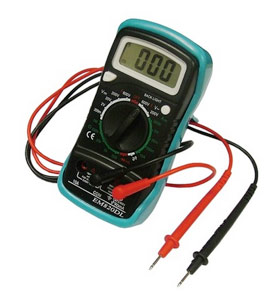
Correct use of a multimeter is essential for safe electrical work at home
What is an Electrical Cable
Although we have delved quite deeply into cable sizes, amp ratings and many other aspects of the electric in your home we haven’t as yet really looked at what a cable is. The term cable, amongst other things, means…
An encased group of insulated wires
A cable is a fairly inflexible (although of course they can be bent) set of wires used to supply the electricity to certain points in your home.
Your meter box is supplied through a cable, sockets are supplied by cables and your ceiling and wall lights are fed through cables.
A cable can carry many wires depending on the job it needs to do. Most domestic cables carry a blue wire which is usually for the neutral current, a brown wire for a live current and a bare wire to take residual current to earth. This cable is called 2 core and earth, or twin and earth.
The previous colours for live and neutral wires were red and black respectively.
It is OK, when working on a building with the old colours, to joint the new to the old as long as the joint itself is done correctly.
For details of these changes please see the link to the Institute of Electrical Engineers. In essence, for domestic use, the cable wire colours will change to those of standard electrical flex colours.
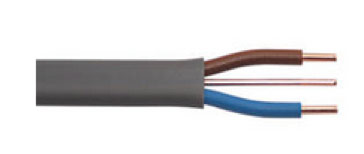
Lighting circuits are usually fed by 1.5mm twin and earth cable
The bare wire, when the cable is used, should be marked with a green and yellow earth sleeve. This should be cut to length and slipped over the wire before it’s connected up.
Another cable used a lot in domestic lighting is called 3 core and earth. The extra core (wire) is in an insulating sheath and is used as an extra conductor to carry power between 2 or more switches operating lights.
The brown wire in a 3-core and earth cable should always be used as permanent live. The other two are interchangeable as long as they are sheathed in order to make it obvious which cable is neutral (blue sheathing) and which is the other live (brown sheathing).
Special lighting switch cable can be bought. This is called "Twin red core" and is used as switch cable for your lights.
Often this is replaced by electricians, who use an ordinary 2 core and earth cable as a switch cable and place a little red tape around the black wire in the cable. See our project on lights and switches.
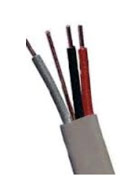
Cable with 2 lives a neutral and an earth
Appliance Flex and why it is Used
Flex is short for flexible and the reality is that a flex is simply a flexible cable.
Flexible cables are used for appliances because appliances usually get moved around a lot and the inflexibility of a fixed cable, either 1.5mm or 2.5mm would soon crack the cable causing faults and potentially the risk of shock and injury.
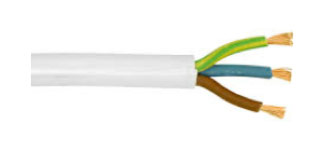
Appliance flex with live, neutral and earth
Electricians Tools, VDE and a Word of Warning
Because of the danger of working with high voltages and high currents, electricians tools need to be completely and fully insulated. This insulation is usually safe up to 1000 volts.
The standards for electrical safety in electricians tools are set by a committee in Germany called the VDE or Verband der Elektrotechnik and they are very stringent as one would expect.
These rules make electricians tools quite expensive as a lot of work goes into them and a VDE approved screwdriver can cost as much as four times that of a normal screwdriver.
Please, if you are doing and electrical work, make sure you have the right VDE approved tools for the job and do not be tempted to save money by buying cheap imitations which will not be anywhere near as well insulated.
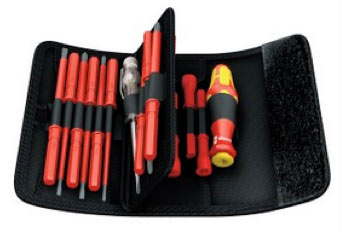
VDE electricians screwdrivers
Books Making Electrical Wiring and Electric Lighting Easier
These books provides a great guide to wiring and lighting round the home. It should still be read with the knowledge that electricity is dangerous and you should check to ensure that you are actually allowed to do the work you would like.
How to do home wiring and lighting easily – Available to purchase here from Amazon
Understand lighting and wiring in the home – Available to purchase here from Amazon

 DIY Doctor Ltd,
  0845 6342 179


