
Saving and reusing water in the home is becoming ever more important due to the ever increasing costs involved in the maintenance of the water supply network and the subsequent supply to the nations homes.
By employing some very simple steps, it’s possible to use the water that we would otherwise simply pour down the drain for other purposes.
What is Grey Water Recycling?
Grey water recycling is the simple practice of taking the waste water from showers, basins, baths and washing machines and instead of simply flushing it down the drain, it is collected or piped to be used to water gardens and flowers, clean cars or flush toilets.
With some more sophisticated systems that filter, clean and purify the water it can then even be piped back into the building it came from to be used as drinking water and the like, if obviously it’s clean enough.
Such systems can cost huge amounts of money so generally they just focus on the reuse in the garden and for toilet flushing.
When it comes to the term “grey water”, this referrs to the 2 types of waste water produced in domestic homes; Sewage (black water) which contains human waste and other waste water (grey water). These are kept separate in the plumbing system of a house but are mixed together when entering the sewerage network.
Despite the perception that it is always raining in this country, in some parts, such as the south east where the rainfall is lowest and the population highest, there is less water available per person than in some Mediterranean countries, hence the reason that grey water recycling is becoming ever more popular.
So with this in mind, as you can see, saving and reusing as much water as possible through grey water recycling and other means is an absolute essential for the future.
How do Grey Water Recycling Systems Operate?
Grey water recycling systems vary a huge amount in terms of both features and complexity and much of this is down to what the system is actually designed to do.
If it’s a commercially built system designed to recycle all of the water used in an office building then it’s going to be fairly complex and extensive.
However if it’s a homemade DIY system that simply takes the water from a washing machine or shower and diverts it into a storage tank for use in the garden then this will be much more straight forward.
Regardless of what type of system it is and what it’s been designed to do, generally it should have the following features:
- Pipework channelling grey water to storage location
- Storage system such as a tank or similar
- Distribution pipework to take water from storage to usage location
- Treatment process – Ideally you will want to treat any stored grey water as it deteriorates quickly and then starts to smell
In terms of how a grey water recycling system works, no matter the size of system, the water to be saved is piped or diverted from the source via pipework and valves to a storage location such as a tank.
Generally this will be outside, however with larger systems this can sometimes be inside.
In some cases, any reclaimed water is sent directly from the source to where it’s used such as from a shower or bath straight to a garden to be used for watering.
Before the water is stored, if it’s not going to be used quickly, it is generally treated to neutralise or at least reduce any contaminants before they start to make odours or turn the stored water toxic.
Finally, when the water is needed, the distribution pipework that runs from the storage tank then takes the water to where it’s needed.
Again how this is done depends on the system. Larger systems will utilise a pump where as smaller DIY systems may use a small pump or even gravity.
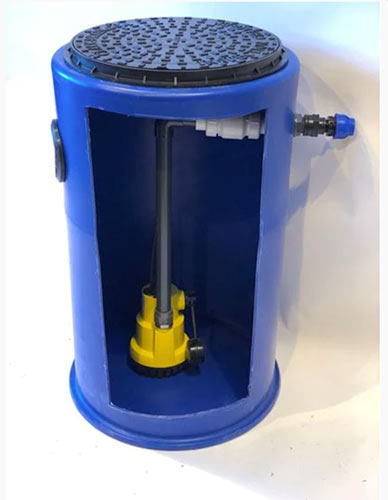
Basic grey water storage tank
What are the Benefits of Grey Water Recycling?
There are numerous benefits to grey water recycling, the obvious being the savings made from the water you don’t have to use. Another huge benefit is to the environment and the savings made on water treatment and distribution.
Unless you are lucky enough to live in a property that has an un-metered water supply, every millilitre of water you use you will have to pay for, so any savings on water that’s essentially “flushed down the drain” will certainly benefit your wallet.
Also, as the water distribution network in the UK is hugely expensive to run and maintain so the more water that can be saved, the less strain the network will have to endure.
Finally, as we have mentioned above, although the UK is famed for the amount of rain we have annually, the South East gets relatively little rain and coupled with the fact that it is one of the most densely populated areas of the country, any water that can be reused and saved from being drawn from the supply network will certainly go a long way.

Cheddar reservoir in Somerset UK
What can Recycled Grey Water be Used for?
In answer to what grey water can be used for, this really depends on how it’s been stored and whether or not its been treated or not.
In most cases grey water wont have been treated as this would involve quite a costly and complex filtration system so when it’s untreated, any grey water should only be used for flushing toilets and irrigation purposes.
However with more expensive or feature-packed systems that have full filtration abilities, the water can be fully cleaned of any impurities and depending on the level of filtration, even reused for drinking and cooking and the likes.
One thing you may be thinking is that water reclaimed from baths, showers, sinks etc. can all feature soaps and detergents that you may think could harm delicate plants and vegetables, however these are generally in such low concentrations and are also diluted to the point that they pose no real threat.
If you are reclaiming water that’s been used in a washing machine, then to help reduce anything harmful to your garden you should really use a low-sodium, low phosphorus product to reduce the risks of soil and water damage.
One final point to note is that when grey water is used for irrigation, it should be applied directly to the soil and not used through a sprinkler system or similar which will lead to it coming into contact with the actual plants themselves.
Can Grey Water From Kitchens be Used?
When it comes to other grey water sources such as kitchen sinks, the water produced here tends to be more contaminated than other grey water due to the presence of cooking oils and chemicals and the similar so is generally not really suitable for reuse anywhere.
As this type of water is mostly only produced in very small volumes, this shouldn’t be too much of a concern.
Can you use Recycled Grey Water on Your Garden?
Yes, you certainly can use recycled grey water on your garden for watering and irrigation purposes. However to reduce the risks of damaging plants, soil and water, such water should only come from baths, showers, sinks or washing machines and not from more polluted sources such as kitchen sinks and the likes.
To reduce risks further you should also opt to use more eco-friendly soaps and detergents and reduce the volumes of phosphorus, sodium and other harmful chemicals that may be featured.

Friendly soap shampoo bar – Image courtesy of friendlysoap.co.uk
Can you Store Grey Water?
In answer to whether grey water can be both stored or not, this very much depends on whether it has been treated before it is deposited for storage.
Grey water contains organic matter such as skin particles, other organic matter, hair, soap and detergents. couple this with the fact that it is normally warm which allows bacteria to thrive, this can quickly cause bad odours and water that’s full of bacteria which can pose a huge risk to health.
With this in mind, any grey water that is stored shouldn’t be stored for any longer than 24 hours at the most.
If, however, you do need to store it for longer lengths of time then it first needs to be filtered and cleaned of all its impurities so that it doesn’t turn foul.
How Does Grey Water Filtering Work?
As we have mentioned above, if you do need to store any grey water for more than 24 hours, before it purifies, it needs to be cleaned and filtered and then piped to its storage location.
In terms of how it is filtered, this will depend largely on the type of system and what type of filtering is included.
On the whole, grey water is one of the easier types of waste water to treat and reclaim as it generally contains less harmful components than other types of waste water.
In terms of how it’s filtered and cleaned, this can be a multi-step process that follows some or all of these steps:
- Filtration: Grey water is fed through a series of screens or filters of different sizes and types to remove the various different sized particles. Filter material can include a range of items including sand, carbon, charcoal or other synthetic materials
- Sterilisation: This can be a standalone process or after filtration. The water is then cleansed using a chemical process comprising of either chlorine, ultra violet and even ozone (a reactive gas that oxidises bacteria)
- Membrane Cleaning: Grey water is passed over and through a special membrane that filters the water on a microscopic level. This is one of the most effective filtration methods and cleans the water to levels suitable for personal hygiene. However it is the most expensive method
Types of Grey Water Recycling Systems
As we have touched on above, there are a great many ways and types of system that can be used to filter grey waste water, some very simple and others very extensive and complex.
As you may imagine, the costs of these systems varies greatly also, with basic systems being the cheapest and the more complex ones being most expensive.
Regardless of the type of system, they generally fall into one of the types below.
Direct Reuse Systems (no treatment)
This type of system takes the waste grey water and uses it directly. Typically this will be for irrigating the garden or similar.
They tend to be basic, cheap and simple to use. Some systems use siphons or hoses that take water directly from a bath for use in the garden, via a series of pipes.
Others use a diverter valve from the existing drainage pipe to channel grey water from its source out to a storage location such as a water butt so that it can be cooled and later used.
Systems such also incorporate DIY setups and can be as simple as just a bucket collecting the waste water from a washing machine.
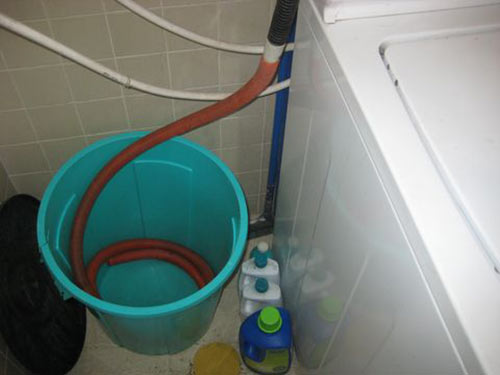
Grey water collection bucket – Image courtesy of cristianlavaque.com
Short Retention Systems
These are systems that take the waste bath or shower water and conduct the bare minimum of treatments, such as skimming debris off the surface and allowing larger particles to settle to the bottom of the tank, where sometimes they can be siphoned off.
The process of skimming and siphoning can either be a manual one, or an automated process with some more expensive setups.
Being the simplest level of treatment they are relatively cheap to buy and run.
The risk of equipment failure is less as expensive repairs (of more complex systems) is not needed.
Depending on the size of the storage medium and the volumes of water that need storing, they can even be located in the same room as the source of grey water, reducing the need for expensive, dual-network plumbing.
Basic Physical and Chemical Systems
It is at this level that grey water systems start to get a little more complex and sophisticated and start to cleanse the collected water.
Generally, these systems use both a filter to remove bulkier debris from grey water before it’s stored and also chemical disinfectants such as chlorine or bromine are added to stop bacterial growth during storage.
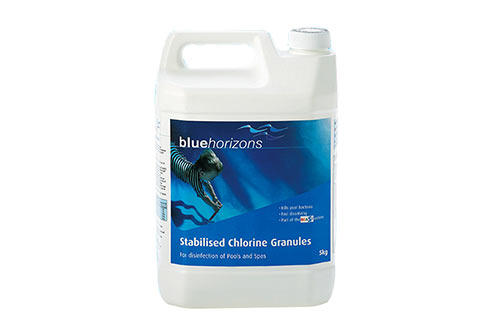
Chlorine used to cleanse grey water
Biological Systems
It is at this point that grey water systems start to get fairly large-scale and industrial.
These systems use bacteria as a means of filtration to remove organic material.
To operate, the bacteria digest the organic contamination when oxygen is introduced to the system.
To add the oxygen to process, this is done in a variety of different way; either using pumps to draw air in through the water while it’s in its storage container or through the use of plants that aerate the water.
With very large setups, if there is a suitable amount of outside land, Reed beds can be created to treat the grey water. Wetland plants such as reeds do a very good filtering job. Their roots do a very good job of breaking down organic matter and making it much safer.
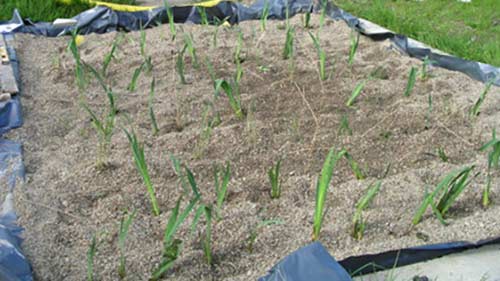
Reed bed grey water filtration system – Image courtesy of lowimpact.org
Bio-Mechanical Systems
These use a combination of biological and physical treatment and are generally the most advanced types of grey water filtration system.
These systems tend to be complex ‘all-in-one’ units which both treat and store the grey water.
They are generally quite large-scale systems, built for treating multiple grey water sources, such as those in an office building or block of flats.
Due to the size of such systems they are very difficult to retrofit due to both cost and plumbing difficulties.
These systems use both physical and biological treatment processes to produce the highest quality water.
However, this comes at a cost as it requires a fair amount of energy to run and as said, initially purchase. Additionally due their size and complexity, they inevitably will also require maintenance.
Integrated Grey Water/Rainwater Systems
Integrated grey water recycling systems are essentially duel systems that capture and store both grey water and rain water.
The main reason for such a system is that they are used where either option cannot produce the sufficient amount of non-potable water needed, or there are significant shortages or rain during dry periods.
These systems are fairly complex and careful calculation on the separate solutions is needed before opting for a combined system, to make sure that it is really worth it.
Due to these levels of complexity there are some things that need to be considered:
- Sizing is critical to ensure enough supply and demand
- The guidelines for both grey water and rainwater need to be followed closely
- The overflow from an integrated system must be discharged into the foul sewer, from the point when grey water has been introduced, as only surface water is permitted to be discharged into water courses, surface water sewers or storm drains
Note: On these lines, this also applied to all of the systems listed above, if at any point there is an excess of grey water that cannot be used then it has to by law, be drained off into the foul sewer!
How Much do Grey Water Recycling Systems Cost?
As with all things, the cost very much comes down to the size and complexity of the system and its overall quality.
A simple short retention system can cost in the region of £500 to buy just the unit (normally around a £1000 including installation), whereas more sophisticated bio-mechanical systems will cost from £3,000 to more than £8,000 for larger systems.
The size of the system and the non-potable water demand that they should satisfy will affect the design and in turn the cost.
Also, you will need to factor in maintenance costs. With small-scale systems this may be as little as a few pounds on replacement parts that may wear over time, but with larger systems this may run into hundreds, even thousands a year, especially when it comes to Biological Systems that may need staff and teams to manage them.
Also systems that feature some sort of filtration system will require the filter to be cleaned or replaced regularly.
What makes such systems viable is the savings that are made through the the volumes of mains water saved from use. Depending on the situation and system used, these savings may not be huge and as a result the payback period can be in excess of 50 years, which can be longer than the life of the system, however the right system in the right location can save huge amounts!
The key to running a grey water recycling system successfully is choosing the right system and making sure it is cheap to install and use. This is why generally the simplest systems are the most effective. Where there is a large non-potable water demand there is more likely a case for a more complex system.
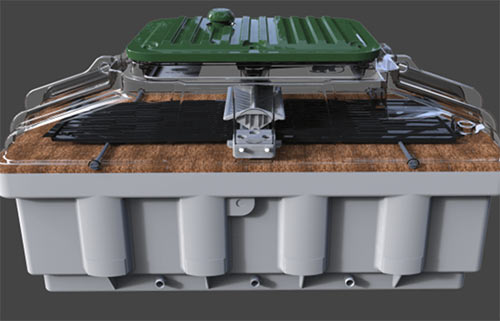
Coconut filter in grey water recycling system – Image courtesy of tanksforeverything.co.uk
What to Think About Before Installing a Grey Water Recycling System
If you are thinking of a basic system that simply takes the waste water from your washing machine and empties it into a bucket or storage tank to be used in the garden, then this is fairly cheap and basic to set up, so there isn’t really any considerations to be made, it’s really just a case of doing it!
However, with larger more in depth and expensive systems, considerations definitely need to be made. With this in mind, regardless of system-type, here are some things that need to be considered:
- Water Demand – simply, how much water is needed for non-potable purposes and what it will be used for. This will determine the size and type of system that should be used
- The balance of supply and demand – The balance of shower use and toilet flushing must be right to make it relatively effective. If for example, people are not at home during the day, they might create significant grey water from washing in the morning and evening, but there will not be the demand during the day from flushing the toilet as they are at work or similar
- Retro fitting – Due to the complexity, most systems are suited to installing in newly built homes and renovation projects, but maybe more difficult to retrofit
- Water quality – A high level of water quality may not be required if the treated grey water is restricted to use in an individual property for toilet flushing. Where stored grey water is treated to a high standard, there is potential for its use in other applications such as vehicle washing. A high standard of water quality may also be required in communal systems to overcome both real and perceived risks associated with using the treated water
Regulations Governing Grey Water Recycling
Ultimately, the regulations that cover water quality depend on exactly what the water is to be used.
When it comes to drinking water, as you may imagine there are very stringent standards that drinking water must meet if it is to be consumed, however there is no regulation of non-potable water. Even if there were regulations, enforcement would be very difficult.
Despite the absence of any formal regulation the British Standards Institute (BSI) has produced some guidelines for both grey water and rainwater reuse; the guidelines in BS 8525 have taken the standards included in the Bathing Water Directive.
There is also guidance which aims to prevent the cross contamination of drinking (potable) and non-potable water supplies in Guidance on Marking and Identification of Pipework for Reclaimed (Grey Water) Systems produced by the Water Regulations Advisory Scheme (WRAS 1999). Some key points include:
- Piping should be marked – with green and black banding
- There should be clear signage
- label the incoming stop valve or other key points so that users are aware that a reused water system has been installed
- Backflow prevention is required: ensure that a suitable fluid category 5 (air gap) backflow prevention has been incorporated into the appliance, to prevent contamination of the public mains water supply

Grey Water not suitable for drinking notification

Main Water Stop Tap indication notice
This, as said, is obviously a very brief run-down of the main points and, in whole, there are many more points that you need to be aware of. For full information, see the BSI Group website here. The BSI supply the relevant site documentation and maintain it, however there is a cost.
In the future, domestic grey water recycling is likely to prove more viable because, firstly, more homes will move on to metered supplies, where water is charged by volume used as opposed to a flat rate. Secondly, it is likely that even in a country which is perceived as being as wet as this one, the pressure on water supplies will increase as both the population and per capita demand for water grow.

 DIY Doctor Ltd,
  0845 6342 179


