
Timber beams or joists can become unsuitable for their original purpose for many reasons. For example, a barn conversion may have a mezzanine floor built to hold only light items, but now needs to support heavy furniture such as a piano or bed.
In many cases, strengthening or upgrading beams and joists is more practical and cost-effective than full replacement. This approach also preserves the original materials, which is often preferred in conservation and heritage projects.
Below, we explain common types of timber damage and the most effective repair methods.
What Causes Timber Beams to Lose Their Strength?
Over time, timber beams can weaken for a variety of reasons. One of the most common is woodworm infestation, where beetle larvae tunnel through the wood, creating hidden cavities that reduce its load-bearing capacity.
Another major cause is rot, either dry rot, which thrives in poorly ventilated areas or wet rot, which develops when timber remains damp for long periods.
Moisture damage is a frequent problem in the UK’s climate. Leaks from roofs, plumbing faults, or rising damp can all introduce excess moisture, encouraging fungal growth and accelerating decay. Even without rot, repeated cycles of wetting and drying can cause timber to crack, warp, and gradually lose strength.
In older properties, natural ageing of timber can also play a role. Beams may have been sized for lighter loads than modern living demands, for example, supporting only loft storage rather than heavy furniture. Structural movement in a building, such as subsidence or settlement, can place additional strain on timbers, causing splits and deflection over time.
By understanding these causes, homeowners can spot early warning signs and take timely action, whether through repairs, strengthening, or targeted treatments. Preventative maintenance and regular inspections are key to keeping timber beams sound for decades to come.
What Sort of Damage Weakens Timber Beams?
Timber beams in UK homes and historic buildings can suffer from a range of damage that reduces their strength and safety. One of the most common issues is insect attack, wood-boring beetles such as the common furniture beetle or deathwatch beetle can tunnel deep inside, leaving the timber riddled with hidden holes and tunnels.
Fungal decay is another major cause. Wet rot develops when timber stays damp for too long, often from roof leaks, plumbing faults, or poor ventilation. Dry rot, while less common, spreads aggressively and can destroy large areas of timber in a short time. Both forms of decay weaken the fibres within the wood, making it less able to bear weight.
Physical forces can also damage beams. Overloading them with heavy furniture, storage items, or new structural demands can cause bending, sagging, or splitting. Structural movement in the building, such as subsidence or shifting foundations, can place uneven pressure on beams, leading to cracks or joint failure.
Even seemingly minor issues, like surface wear from years of use or exposure to fluctuating temperatures and humidity, can gradually erode a beam’s integrity.
Regular inspections and early repairs are essential to stop small problems from becoming costly structural failures.
Types of Timber Beam Weaknesses
Timber beams can lose strength for many reasons. Below are the most common types of weakness found in UK homes and buildings:
Excessive Bending, Bowing and Warping
Usually caused by overloading or age, these problems are often easy to spot visually as the timber will be physically bent.
While common in older properties, they can also affect newer beams if they are underspecified or overloaded.
Undersized Timber Sections
Some beams and joists are simply not strong enough for their intended load. Instead of costly replacement, many can be strengthened at a fraction of the price.
Changes in Building Regulations
Older properties may have beams that were installed before modern building standards existed.
Refurbishments often require upgrades to meet current regulations, especially if structural changes are made.
Alterations and Refurbishments
Conversions, extensions, or new staircases can create headroom issues. Smaller, reinforced timbers can sometimes replace large beams to meet both strength and clearance requirements, but structural calculations are essential.
Breaks, Cracks and Splits
Beams can fail over time due to decay, heavy loads, or impact. Many of these can be repaired using proven strengthening methods.
Breakage Across the Grain
Partial or complete failure can occur across defects such as knots, often triggered by excessive weight or timber decay.
What Sort of Timber Strength Damage Can Be Repaired?
In many cases, timber beams and joists that have lost strength can be repaired rather than replaced. Modern repair methods make it possible to restore load-bearing capacity and extend the life of structural timbers, even in older properties.
Cracks, Splits and Minor Breaks:
Small to moderate damage from natural ageing, shrinkage or mild overloading can be repaired using resin bonding, steel reinforcement or by attaching additional timber sections.
This restores both strength and stability without removing the original beam.
Woodworm and Insect Damage:
If caught early, timber weakened by wood-boring insects such as the common furniture beetle or death watch beetle can be saved. Once the infestation is treated, specialist fillers, resins or laminated timber inserts can be used to reinforce the affected areas.
Rot and Decay:
Beams weakened by wet rot or dry rot can often be repaired if the decay hasn’t spread too far.
Damaged sections may be cut out and replaced with sound timber or strengthened with steel plates or resin systems.
Removing the source of moisture is essential to prevent future damage.
Bowing and Sagging:
Timbers that have warped or bent under heavy loads can be supported with steel brackets, tensioning systems or additional joists.
These solutions help redistribute the weight and restore the timber’s load-bearing ability.
Types of Timber Beam Strength Repair
When timber beams lose strength, replacement isn’t always necessary. In many cases, modern repair methods can restore structural stability while keeping much of the original timber in place and also carry out the work in situ, meaning less cost and much less hassle.
Some of the most common repair methods today are as follows:.
Resin Repairs
Specialist resins can be injected into cracks, splits or hollow sections of a beam.
Once hardened, the resin bonds with the timber to restore strength and prevent further movement.
This method is often used where beams have suffered woodworm or decay but still have enough solid material and residual strength to hold reinforcement.
Steel Plate Reinforcement
For beams that carry heavy loads, specialist steel plates or brackets can be fixed alongside the existing timber and also a new section to replace any damaged sections and the steel plates bond and support the existing and new sections.
These help to share the weight and reduce the strain created when a cut is made and new and old timber joined together. It is a cost-effective way of extending the life of beams without full replacement, although not always too visually appealing.
Timber Splicing
In cases where part of a beam is badly damaged, the weakened section can be cut out and replaced with a new piece of treated timber.
Similar to the above, the new and old sections are bonded together using modern adhesives or concealed high tensile rods and resins sat down inside a hollowed out channel in the existing timber.
This helps to retain the existing visual appearance of the timber by concealing the fix within the timber itself while at the same time creating a strong and long-lasting repair.
This is sometimes known as a ‘modified flitch’ design and approximately doubles the bending stiffness of a typical timber.
Surface Treatments
Alongside structural repairs, beams should also be treated against woodworm, rot, and damp. Preservatives and coatings help prevent further damage and protect the beam once strengthened.
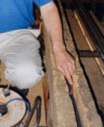
Slot in the top of the weak beam – insert high tensile steel Rebar and Epoxy Resin
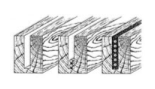
Beam upgrade using structural epoxy pouring resin
How to Repair and Re-Strengthen Timber Beams
After examining the various ways in which timber beams can become damaged and also what actually causes the damage, it’s now time to take a look at how we can then actually repair it.
Fortunately in many cases, beams can be repaired and re-strengthened in situ using modern techniques that preserve the character of the building while meeting safety standards and also result in a lot less cost and hassle.
Step 1 – Assess the Damage
The very fist job is to start by identifying whether the weakness is caused by cracks, insect activity, rot or excessive sagging. Once you know this you will then be able to work out what repair method is best.
To check the timber, inspect it closely using the tips above, look for insect frass, crumbling indicating rot and any damp. Also any bending or sagging should be visually obvious.
In some cases, a professional survey may be needed to check if the timber still has enough solid material to take reinforcement.
Step 2 – Choose the Right Repair Method
Once you have identified the cause of the timber damage you can then select the most suitable fix for the damage.
The most common strengthening methods we have detailed above and include bonding steel plates to the sides of the beam, injecting specialist resins into cracks and hollows or splicing in new timber sections.
In conservation work, these repairs are often designed to be discreet so the original timber remains visible.
Step 3 – Treat the Cause
Before any repair or reinforcing you should address the source or cause of the problem.
Whatever this may be, for example, where damp is present, remove damp conditions that have caused the rot, where woodworm is evident, treat it and kill them off.
Without fixing the actual cause, even the best repair won’t last.
Step 4 – Repair Timbers With Chosen Repair Method
Once prepared and the actual cause of the damage has been fixed, the beam can be strengthened using the chosen repair method.
Resin repairs and steel reinforcement are particularly effective at restoring lost load-bearing strength, making the beam as reliable as when it was first installed.
For more help and in-depth information on both repair methods, see our timber repair project.
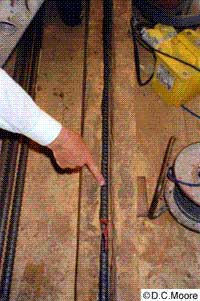
Weak beam upgrade using high tensile rebar and epoxy pouring grout – Image courtesy of Property Repair Systems and DC Moore
Step 5 – Ongoing Care:
Aftercare is absolutely essential and almost as important as the fix itself to prevent any future issues or reoccurrences
After repair, inspect the beam regularly for any new signs of stress, cracking or infestation. Preventative treatments and proper ventilation will help keep the timber strong for decades.
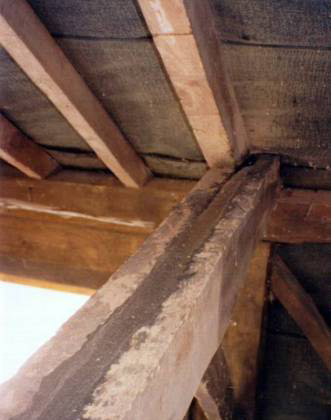
Complete weak beam upgrade showing epoxy resin – Image courtesy of Property Repair Systems and DC Moore
Repairing and re-strengthening timber beams is often more cost-effective than replacement, and it helps maintain the integrity and heritage of older UK buildings. With the right approach, weakened beams can continue to serve safely for many years.

 DIY Doctor Ltd,
  0845 6342 179


