
WHEN DOING ANY ELECTRICAL WORK AROUND THE HOME, MAKE ABSOLUTELY SURE YOU HAVE TURNED OFF THE POWER TO THE CIRCUIT YOU ARE WORKING ON AND MADE SURE NO-ONE CAN TURN IT ON BY MISTAKE
PLEASE SEE OUR PROJECT ON PART P BUILDING REGULATIONS FOR INFORMATION ON DIY ELECTRICAL INSTALLATIONS.
For further safety measures see the specific rules in our electrical safety project
Has the Fuse Gone in My……….?
Test circuits easily without having a degree in electronics. Full instructions come with this easy to use multimeter.
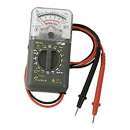
Circuit Tester Multimeter
Are The Sockets Safe?
Test your electrical sockets easily, simply by plugging this in.
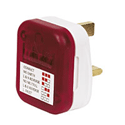
Plugin Socket Tester
Saving Power
There are many simple ways to save power around the house:
- Make sure your water cylinder jacket goes all the way round and is the thickest one you can get on there.
- Change 100w bulbs to 60w, there is not a vast difference in light.
- Dimmer switches will save on electricity, as will low energy bulbs but they cannot be used together.
- Keep the hot water thermostat at a sensible temperature.
- Check the settings on security lights and reduce the bulb wattage.
- Make sure your loft insulation is up to scratch.
- If its not being used turn it off
Broken Bulb
If your bulb has broken at the holder, turn the power off at the mains making absolutely sure no-one can turn it on by mistake and push a carrot into the brass connector. Use this as a handle to twist out.
Rewire Needed
If you have just moved in and are wondering if you need a rewire, look for the following points. They indicate the possibility that you wiring is in need of an upgrade.
- Round pin sockets or round light switches.
- Black rubber cables or black switches and light holders.
- Cotton covered cables or twisted wires from light fittings.
- Sockets in skirting boards or switches on wall in bathroom.
All article content written and produced by Mike Edwards

 DIY Doctor Ltd,
  0845 6342 179


