
Chemical and epoxy resin fixings and anchors are a relatively new concept and essentially offer an alternate way of fixing items other than using screws, bolts and the similar.
Used correctly, chemical fixings and anchor resins produce an extremely strong fixing as they essentially bond to their surroundings. Find out all about them and how to use them below.
When to Use Chemical Fixings and Resin Anchors
If you need to fix close to the edge of a brick or stone pier because you need to hang a gate or fix a letterbox or nameplate, drilling and using screws and bolts which expand in their associated wall plugs may crack or split the masonry.
The way to get over this is to use chemical fixings or resin anchors injected into a pre-drilled hole.
A section, or stud, of threaded bar is then screwed and bonded into the hole. The resin goes very hard, binding the thread to the masonry and leaving a short length of thread sticking out onto which you can bolt your ornament, gate post, bracket or aerial for example.
These resin anchors will take massive loads, but preparation is important. For the purposes of this project we will show you how to use chemical fixings or resin anchors as they are sometimes known.
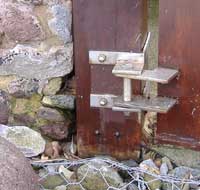
Gate hinge chemically fixed
How to Fix Bars, Studs and Anchors Using the Chemical Fixing Method
Four easy stages complete this operation and these are as follows:
1. Drill a Hole
Studs are generally available in 8, 10 and 12mm sizes. Dowels, for reinforcement or joining are available in high tensile plated steel or epoxy-glass in 6 – 25mm diameters.
Masonry drill bits are required for this and you need to allow a standard over-size of at least 4mm on the diameter – an 8mm stud will require a 12mm drill bit and so on.
2. Clean the Hole of Dust and Debris
Proprietary brushes are available or you can use air, by blowing down a tube (don’t suck, close your eyes and wear a dust mask and eye protection) or using a compressor. If you have an old vacuum cleaner handy this can also work well.
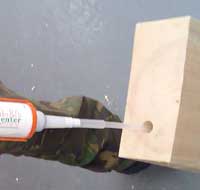
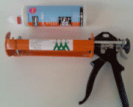
Injecting Resin Using Skeleton Gun
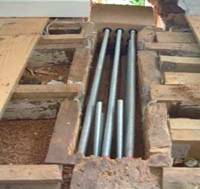
Floor Boards Removed
3. Inject Resin Using the Applicator Skeleton Gun
Ensure the gun is fitted with an extension tube of the correct length and diameter to reach the bottom of the hole. Inject gently, slowly removing the tube from the hole, to deposit resin without trapping air.
For accurate, waste free injection pre-mark the tube with tape, so that you can stop operating the trigger when the tape appears. Set the tape at a distance from the tube end to allow for the resin that will be displaced by the bar.
Various applicator skeleton guns are available, depending upon which resin you choose. You may already have the basic 300cc and/or 400cc skeleton guns, which are used with certain resin anchor products.
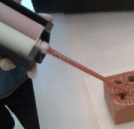
Pure Epoxy – it mixes in the nozzle – ideal for anchoring bolts and bars
Polyester Anchor Resin – faster than Epoxies, ideal for rapid anchor setting
4. Mask the Threaded Stud With Electrical Tape
Make sure that the tape goes over the part required to take the nut, to avoid resin contamination, which might block the threads.
Take the stud in the gloved hand and slowly rotate whilst pushing it into the resin filled hole. Complete kits are available for resin fixing if you have a lot to do.
5. Leave to Cure and Set Correctly
Once the anchor bolt, stud or threaded bar has been inserted into the drilled hole that is now full of resin, before you can fit your gate or whatever you are attaching to the fixing you will need to leave for the manufacturers specified time for the resin to set. This should be stated on the resin container.
Once it has set rock hard you can then go ahead and complete the job by fitting your object in place.
Types of Resin
There are two main types of resin fixings:
- Epoxies
- Polyesters
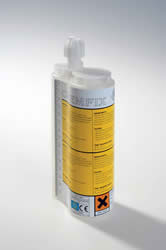
Chemical Resin
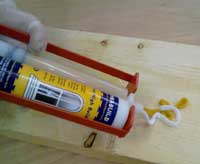
Resin Being Applied
With most manufacturers these are available in fast (3 – 6 minutes), medium (15 – 30 minutes) and slow setting (4 – 6 hours) formulations in three main pack types;
- Single cartridge tube – no hand mixing required – two resins inside in a plastic bag – fits standard skeleton guns – resins mix in the nozzle, inside a spiral, which is replaced if the resin hardens before the tube is exhausted
- Single cartridge tube – hand mixing required – fits standard skeleton guns – mixed resin pushed into an empty cartridge using a grease pot type pusher plate
- Dual cartridge tube – no hand mixing required – two resins inside twin plastic tubes linked together – requires a specific skeleton gun for each type, depending on cartridge size and mix ratio – resins mix in the nozzle, inside a spiral, which is replaced if the resin hardens before the tube is exhausted
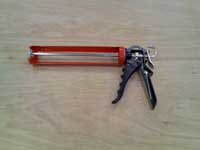
Skeleton Applicator Gun
If you need to fix heavy or awkward objects to stone and masonry surfaces then sometimes screws and the like just aren’t strong enough so in these instances the best products to use are chemical fixings and anchor resins.

 DIY Doctor Ltd,
  0845 6342 179


