
The affects of a flood in your home can be totally devastating not only to your carpets, furniture and other fixtures but also to the structure of your home itself which includes the plaster on the walls, the floor, whether timber or concrete and the bricks and blocks that form the walls themselves.
To ensure no lasting damage is caused it is essential that any flood damage is delt with correctly, read on to find out how.
Steps to Follow for Flood Repairs
After the debris has been removed, including any floor coverings, damaged plaster and plaster board you need to take the following steps;
- Check your Insurance cover and advise your Insurers – take as many photographs as you can BEFORE disposing of any household contents: you may need evidence to prove your losses.
- Clean and check the drains, air bricks (if you have a timber floor down stairs) and wash out all debris with fresh water. If sewerage is involved you should sterilise the floors and walls.
- Ask a gas engineer, plumber and an electrician to check the services before using them.
- Hire a dehumidifier and shut all doors and windows in the damp areas. Install a Humidity Meter to monitor the dampness in the air in the building. Install a large enough dehumidifier (or several) until you can bring the Relative Humidity below 60% on the meter
- If timber floors are affected, lift boards and clean out the void underneath, including the air brick holes. If you are using a dehumidifier leave some boards up and fit temporary covers to the air bricks, to avoid trying to dehumidify the whole of the UK.
- Keep a chart recording how much water your dehumidifier is producing – this will enable you to tell when most of the added water has been removed. You should see a sudden drop in water output, after several weeks, or even months.
- A hygrometer may also come in handy here in order to measure the moisture content within each room of your home
- When it comes to walls and floors make sure that they are thoutghly sterilised with a suitable sterilising solution. This way you can then ensure that any bacteria or viruses from sewage are wiped out and cannot cause any future contanination or risk to health
- Check and record the moisture content of your walls and timbers regularly – a simple electrical damp meter will give a good guide to progress. You are looking to bring timbers below 18% and masonry below 2%, but contaminating salts may leave you with higher readings so be wise to this.
- It is really essential that all wall and floor areas are allowed to dry out completly before you attempt any form or internal redecoration but in some instances this is not possible. In this situation you may need to use a tanking product to seal the damp away from internal wall or floor areas so that they can be repaired and redecorated. Before you do so, it is a wise idea to get these areas checked out by an expert as by tanking an area you are effectively sealing the damp or moisture in and this could cause more issues later down the line
- Walls should only be replastered using sand and cement render containing a salt inhibitor and waterproofer – the specification is critical if you are to avoid salts from emerging later and ruining your decorations. A product called Renderproof is a great solution and can be mixed in with your sand and cement. It then acts as a salt inhibitor, plasticiser and waterproofer – click here to learn about re-plastering and whats involved
- When it comes to older walls, they may benefit from the use of a plastic lining membrane (pictured above), rather than sand and cement – these membranes are easy to fix, waterproof and can be plastered or boarded immediately. They improve the warmth of the walls and floors, can carry insulation and prevent any damp or ‘salts’ from reaching the decorations. in terms of salts mentioned above, it is also a good idea to treat any walls with a salt neutraliser before plastering or lining as it kills off the slats and prevents them from coming back and ruining interior decorations at a later date
- Timbers and walls may grow mould – keep the humidity below 60% to avoid this. Again, use a damp test meter or humidity meter to monitor moisture levels in materials and also a hygromter to keep track of humidity levels
- Timbers may also be attacked by wood rotting fungi and insects. Check that the timbers have dried below 18% and then treat them with a good quality fungicidal wash and then ensure they are fully treated with a suitable wood preserver.
- Dry rot is a possibility – you can install simple test sticks in vulnerable walls and timbers to check if rot is occurring – they change colour from blue to yellow (click here to learn about Dry Rot Test Sticks).
- Where timbers have been damaged beyond repair these can be relatively easily fixed without the need for replacement of the whole beam or joist. With the beam or joist supported suitably to take any load weight, the damaged section can be cut off and a new section can be spliced on using a timber resin splice kit, find out more here
- Monitor the condensation levels with your rooms along side using the above mentioned damp testers. To check these levels you can use condensation test strips. Place these on your coldest walls and they will change colour when condensation is present
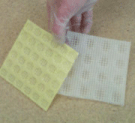
Mesh Membrane – it provides a dry decorative surface fast for plaster or plasterboard
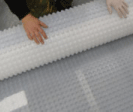
Air Gap Membrane – cover damp or salty areas, before lining or plasterboarding
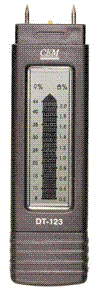
Damp test meters can be used to check the moisture content in walls

Hygrometer humidity meters monitor the moisture content in the air
In terms of future-proofing yourself and your property from floods if you live in a high flood risk area, a handy products to have around are self filling sand bags. They store flat and dry and when needed just wet the bag and the gel powder inside expands to fill it automatically.

 DIY Doctor Ltd,
  0845 6342 179


