
Good drainage is essential in every setting, whether domestic, commercial, water or waste systems. Poor drainage allows water or waste to build up, leading to damp, flooding and structural issues.
One of the simplest and most effective solutions is a French Drain. Learn below how to build and use one to keep your property dry and protected.
What Is a French Drain?
A French drain is a gently sloped trench filled with gravel or stone that redirects surface water away from buildings, gardens or driveways. It’s a simple and effective way to stop water pooling, protect foundations, and prevent flooding in problem areas.
In basic terms, it’s essentially narrow trench dug at a slight angle, lined with a permeable membrane, and filled with gravel or stone to allow water to flow freely through it.
The key idea behind a French drain is gravity. The trench is laid to a gentle slope, guiding water naturally away from your home or problem area towards a more suitable drainage point such as a soakaway, gully or public drain.
This helps with removing surface water and protecting brickwork, preventing damp and mould, and reducing the risk of flooding during heavy rain, something particularly important in many parts of the UK where clay soils and poor drainage are common.
Modern French drains often include a perforated plastic pipe placed within the gravel to improve water flow and make the system more efficient. The pipe collects water from the surrounding soil and channels it safely away. Once the trench is filled, it can be covered with more gravel, decorative stones, or even turf, allowing it to blend seamlessly into the landscape.
The main considerations are: where to dig the trench; and where to drain the excess water to.
Rainwater and runoff should not be directed into foul water drainage. Read more on the difference between foul and surface water drainage in our guide which contains important information to prevent you polluting rivers and streams with sewage or harmful chemicals.
You should check whether you need building regulations for your planned drainage system – see more about building regulations and rainwater drainage.
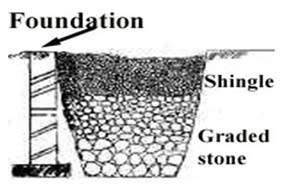
French Drain detail showing a cross section showing the graded stones
Are French Drains a Good Solution?
French drains are often an excellent solution for managing water around your home, garden or driveway. They are particularly effective in the UK, where heavy clay soils and frequent rainfall can cause water to pool and damage property.
By redirecting surface and groundwater away from vulnerable areas, French drains help prevent damp walls, subsidence and flooding.
One of the key advantages of a French drain is its simplicity and reliability. Once installed correctly, it requires very little maintenance while providing long-term protection against water damage.
They are also flexible in design, allowing you to target specific problem areas, such as near foundations, patios or low-lying garden spots prone to waterlogging.
However, while French drains are highly effective, they are not always a complete solution on their own. For properties with severe drainage issues, high water tables or extensive foundation problems, a professional survey and additional drainage solutions may be needed.
Advantages and Disadvantages of French Drains
Advantages
- Effective Water Management: French drains efficiently redirect surface water and groundwater away from walls, foundations, driveways and gardens, preventing pooling and flooding.
- Prevents Structural Damage: Helps reduce damp, subsidence and erosion around buildings, protecting the integrity of your property over time.
- Low Maintenance: Once installed, French drains require minimal upkeep, making them a practical long-term solution.
- Flexible Design: Can be installed in a variety of areas, including gardens, patios, driveways and around building foundations, tailored to specific water issues.
- Cost-Effective: Generally less expensive than extensive drainage systems or major landscaping adjustments, especially when installed as a DIY project.
- Environmentally Friendly: Uses natural materials like gravel and soil to manage water, reducing the need for mechanical pumps or chemical solutions.
Disadvantages
- Installation Complexity: Proper installation requires correct trench gradient and material selection; mistakes can reduce effectiveness.
- Not a Complete Solution for Severe Issues: May not be sufficient for high water tables, very clay-heavy soils or major foundation problems without additional measures.
- Potential Clogging: Without adequate filters or geotextile fabric, drains can become blocked with soil, silt or roots over time.
- Space Requirements: Trenches need enough room to install, which can be challenging in tight gardens or landscaped areas.
- Initial Effort and Cost: While cost-effective compared to other systems, installation can still be labor-intensive, especially for longer drains.
Does a French Drain Also Need a Soakaway?
A French drain is designed to channel water away from areas prone to flooding or pooling, but it doesn’t always remove the water completely from your property. In many cases, the water collected by the drain needs somewhere to go. This is where a soakaway comes in.
A soakaway is a deep pit filled with gravel or stone, allowing water to slowly percolate back into the ground. Connecting a French drain to a soakaway provides a controlled exit point for excess water, preventing it from pooling at the end of the drain or causing new damp issues.
Whether you need a soakaway depends on your soil type and the location of the drain. In sandy or well-draining soil, water may naturally disperse, reducing the need for a soakaway.
In clay-heavy or poorly draining soils, a soakaway is often essential to ensure water is safely absorbed without causing surface flooding.
By combining a French drain with a soakaway, you create a complete drainage solution. The drain channels water away from vulnerable areas and the soakaway allows it to disperse gradually, protecting your property and landscape from long-term water damage.
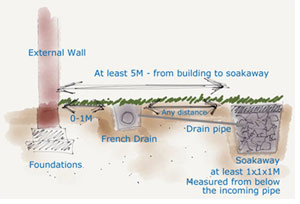
French drain and soakaway
Do I Need Planning Permission for a French Drain?
In the UK, most domestic French drains do not require planning permission, as they are considered maintenance work rather than new construction.
Installing a French drain to improve drainage around your home, garden or driveway is usually classed as permitted development, meaning you can carry out the work without seeking formal approval.
However, there are exceptions. If your property is a listed building, located in a conservation area or the drain will significantly alter the land’s layout or involve large-scale excavation, you may need to notify your local planning authority or apply for permission. Always check with your council before starting any major drainage project.
Additionally, if the French drain will connect to public sewers or cross neighbouring land, you may need consent from the relevant authorities or landowners.
French Drains – How They Work
The drainage should be installed at a low point in the affected area to allow it to drain surface water away to storm drain, or a Soakaway.
Water will always find its way to the lowest point in the landscape, so it is common sense that the area most affected is the place you should build your French drain.
For a guide to building a soakaway including an image showing soakaway design, go to our Soakaway project.
When Can I Use a French Drain?
You can utilise a French Drain in pretty much any location, but before fitting one, always make sure all existing surface water drains, gullies, and rainwater pipes are clear, unblocked and correctly connected to a mains drain or soakaway. This ensures your drainage system works efficiently from the start.
French drains are not designed to replace standard surface water systems. Instead, they are ideal for areas where water collects against walls, driveways or buildings. The drain helps redirect excess water into the soil, preventing damp, erosion and damage to brick or stonework.
Once water enters the trench, it should flow naturally to a suitable discharge point such as a soakaway or watercourse. Over time, the system can also help walls that have been exposed to standing water to gradually dry out during warmer, drier weather.
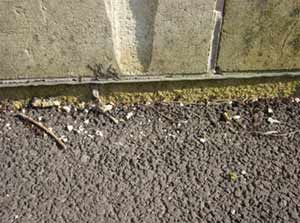
The surface of this wall is damaged below the DPC, where standing water has pooled against this Wall
Will a French Drain Solve a Damp Problem?
While a French drain can help manage excess surface water and reduce damp issues, it may not completely eliminate the problem. In some cases, the drain can overperform, drying out the surrounding soil too much and potentially leading to foundation settlement.
For lasting damp protection, combine a French drain with other measures such as installing a damp proof course, applying tanking, or using a high-quality waterproof sealant like Technoseal. Apply sealants only when the wall is completely dry, ideally after a warm, dry spell.
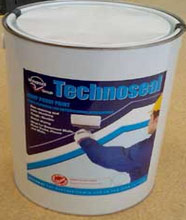
Apply Technoseal to exterior walls to create a durable waterproof barrier
To improve drainage performance further, fit a Geotextile Membrane along the wall and into the drain. This directs water away from the wall, helping to keep the masonry dry and protect against future damp problems.
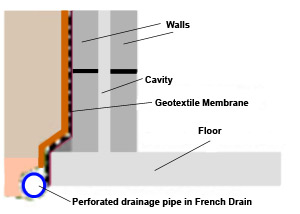
Fit Geotextile Membrane down the wall to the French Drain
Where Should a French Drain Not Be Located?
A French drain is positioned at the lowest point of an area to channel surface water away safely into a storm drain or soakaway.
Because water naturally flows downhill, installing the drain where pooling occurs ensures the most effective water removal and helps prevent flooding or damp issues.
With the above in mind, avoid installing a French drain near building foundations unless it is specifically designed to protect the structure as improper placement can direct water toward the foundation and cause damp or subsidence issues.
French drains should also be kept away from areas with underground utilities such as gas, water and specially electricity lines. Digging in these areas without proper checks can be dangerous and may result in costly damage or legal liability. Always check for utility maps or consult with a professional before excavation.
Additionally, avoid placing a French drain in locations where water cannot be properly discharged. Installing a drain that directs water toward low-lying areas, neighbours’ properties or hard surfaces without proper soakaways or outlets can worsen flooding problems and create disputes.
Finally, avoid extremely steep or highly clay-heavy soil unless properly engineered. Clay can impede drainage, causing water to pool instead of flow, while very steep gradients may cause erosion or collapse.
Correct site assessment before any work begins ensures your French drain performs effectively and safely.
For full details on how to design and build a soakaway, including diagrams, visit our Soakaway Project Guide.
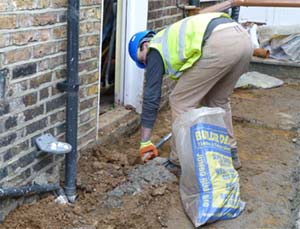
Digging near the Affected wall for a French Drain
How to Make a French Drain – Basic Steps
Making a French Drain is actually a fairly simple process, albeit a fair bit of shovelling, digging and hard work.
Firstly, start by digging a trench to the desired width and depth. Fill it with graded stones, placing larger rubble at the bottom and finer shingle on top to promote water flow and filter debris.
For faster drainage, you can add a perforated pipe at the base. This allows small amounts of water to seep naturally into the ground while directing larger volumes away, reducing the risk of flash flooding.
A French drain should never be dug deeper than the building’s foundations. For older properties, ensure the trench slopes away from the wall at a 45° angle or more to keep the surrounding ground stable and maintain proper foundation support.
If your building has shallow foundations, position the French drain at least 1 metre away from the structure to avoid weakening the base.
Once installed, you can cover the surface with topsoil to blend with the surroundings. However, always add a layer of weed control fabric first to prevent root growth and maintain good water flow.
For a detailed step-by-step installation, see our Step-by-Step Guide to Building a French Drain.
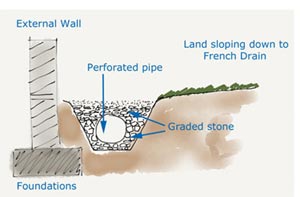
French Drain detail showing a cross section showing the graded stones and a perforated drainage pipe
French Drain Cleaning and Maintenance
Over time, French drains can become blocked as soil and fine particles build up between the stones, reducing water flow. Regular cleaning and simple maintenance can greatly extend the life of your system.
To help prevent blockages, line the trench with quality weed control fabric before adding shingle or stone. This barrier stops fine soil from entering the drain and keeps water flowing freely.
If your drain includes a perforated pipe, check it periodically to ensure it’s clear and working properly. Add rodding eyes and small access chambers at bends to make cleaning easier and allow for regular rodding when needed.
It’s also good practice to maintain other surface water drains around your property. For more professional guidance, visit the National Association of Drainage Contractors (NADC).
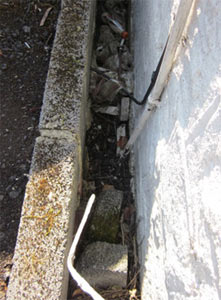
French Drains need Maintenance to remain in Good Working Order
A French Drain is an excellent and fairly cheap and straightforward solution for dealing with unwanted water buildup, especially if it is too close to a structure and is causing water and moisture related damage.

 DIY Doctor Ltd,
  0845 6342 179


