
Considering the volume of rain that the average UK home has to deal with each year it’s no wonder that occasionally some homes will suffer from damp and mould problems on their internal walls.
In this DIY guide we look at all the causes of damp and mould in the home and how to cure them.
What Causes Damp in Homes?
The causes of a damp or mould issue can vary greatly, but in general your issue will either be caused by a condensation, rising damp or penetrating damp problem.
This may sound fairly simple to diagnose however there is a vast array of potential issues under this that include a broken or bridged damp proof course, cracked roof tiles, damaged or leaky guttering, cracked or broken mortar joints, damaged lead flashing, blocked or damaged drains, hygroscopic salts and many others.
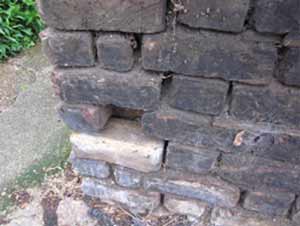
Cracks in your wall can let in water, making your wall damp which encourages mould growth
Due to the vast range of potential faults, as you can imagine, it can be an absolute nightmare to track down the actual cause of a damp and mould issue, so quite often a lot of investigation is involved.
However, once you have pin pointed the cause of the problem, in most cases it’s then a pretty straight forward fix, but as with all things depending on what it is will depend on costs and timescales.
One further complication comes when you couple the cause of the problem with poor ventilation (poor or non-existent air flow).
Even when you have fixed the core problem, if there is not enough ventilation to dry everything out then this is when mould problems develop which can ruin any repair jobs and also trick you into thinking the issue hasn’t been resolved when it actually has.
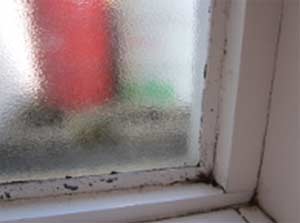
Damp and condensation can cause black mould to appear on your internal walls and window frames
In most cases the source is the result of poor maintenance, so there is a basic list of things you can check to rule out the most likely causes.
Can you Just Seal Over Damp Walls?
No, you should never simply seal over damp walls and mould with products such as liquid sealers or tanking as you’re just masking the problem over and not actually solving it.
Although it may visually fix a damp problem on an internal wall visually, without repairing what is causing the damp itself, it will still be there and in almost all cases will simply get worse and spread to other areas, causing bigger, more expensive problems. Ultimately a building must be allowed to breath and sealant prevents that.
Moisture is present in pretty much every building material and the act of evaporation controls the majority of this moisture content.
If a building is sealed then it will not be able to breathe and if it can’t breathe then moisture cannot evaporate and it will simply sit there and manifest itself into any number of further damp and mould problems in and on your walls.
Can Damp and Mould Affect my Health?
Aside from the potential structural damage a building can suffer from due to damp, your health is also at risk. Although damp conditions can certainly contribute to respiratory problems, the majority of the risk comes from any resulting black mould growth.
The spores that are emitted by mould on internal walls have been linked with many health issues including breathing problems (asthma), infections, and allergic reactions, skin conditions and some moulds can give off toxic spores that can pose even greater health risks and some have even been linked to certain cancers!
In the event that you find that you have any form of black mould growth then it will need to be delt with immediately and killed off before it get rooted in and becomes a nightmare to remove.
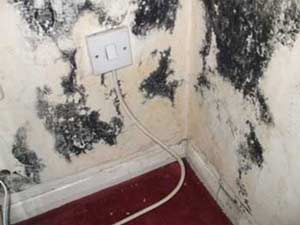
Black mould growth on walls can be very bad for your health especially in extreme examples such as this one
Why Does Damp and Mould Keep Coming Back?
If you have a black mould problem that keeps coming back despite how many times you clean it away, in most cases this is due to the fact you haven’t resolved the actual cause:
- It’s not dead: The act of cleaning is not actually killing off the spores and they are simply re-growing again. Ensure you use a specific mould spore killing solution
- Humidity’s too high: High humidity provides ideal growing conditions for black mould. It should be no higher than 50%. Use extractor fans and windows when cooking and bathing and avoid drying clothes indoors
- No ventilation: With lack of ventilation, any moist, humid air stays in a room and ultimately causes condensation and associated issues. Ensuring all the air in your home is exchanged at least a few times a day will limit the ability for mould to grow. Ensure windows and trickle vents stay open when possible
- There’s still a leak/issue: If the mould keeps growing back despite the fact you’ve ventilated and used the correct cleaner, then the original issue causing it has ultimately not been fixed properly or a new issue has arisen
- Use heating: Although you may be tempted to reduce your heating use to save money, this can lead to condensation, damp and mould issues. By keeping rooms warm, this reduces the chances of any cold surfaces existing that are ideal for condensation to form
Causes of Damp and Black Mould
As you can see from the above, both damp and mould can be a serious problem and ultimately the source of the wall damp needs to be located and fixed as soon as possible to prevent health issues and further damage to your property.
Once the source has been repaired you can then go about fixing the resulting damage done to any decorations and also remove any traces of the black mould from the walls.
Below you will find a selection of potential causes of damp and mould on internal walls that will give you some areas to start at.
NOTE: some checks involve working at height on your roof. If you do not have the correct ladders and safety gear or the confidence to climb up there please hire/borrow a decent pair of binoculars as these will allow you to see everything you need to).
Better still, if you have a drone and camera or friend with one, then this will allow you to see all you need to in great detail from the safety of ground level!
Damp Proof Course Not Present, Bridged or Broken
This is the most common cause of rising damp issues, so if the damp issues you are experiencing are just above your skirting, no more than 1.2M high then there is a good chance this is where your problems lie.
Rising damp will very rarely get above 1.2m as gravity takes over and stops the capillary action allowing the damp to physically rise any higher.
If this sounds familiar to you then you will need to check that you have a DPC (damp proof course) and that if you do, that it’s not faulty or bridged.
As the name suggests the damp proof course provides your home with a waterproof layer that prevents water and moisture from traveling up your walls.
Some older properties were constructed without a damp proof course installed so you will firstly need to check and see if your property actually has one.
A DPC can be either constructed from slate (older properties), felt or plastic. In very rare cases, lead damp proof courses are installed.
You should visually be able to see it on the outside wall between courses of bricks close to floor level.
A damp proof course "should" always be a minimum of 6 inches (150mm) above ground level. If you are unable to see after thorough investigation, it may be that you do not have one.
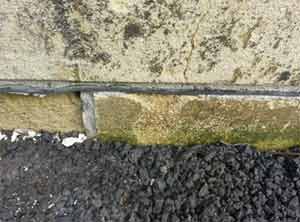
A typical Damp Proof Course – if this is faulty or missing it may be the cause of the damp and mould on your walls
As well as horizontal DPC’s there are also vertical ones where an opening such as a door or window appear. In this case, when the external wall turns to meet the internal wall, a DPC membrane is added to prevent moisture from traveling through to inner surfaces.
As with the majority of materials, things degrade and break over time and this is also the case with DPCs. With a slate DPC, this can break and crack over a period of years and the same goes for felt and lead DPC’s.
Weather can also play a big part here in that consistent and prolonged exposure to sun and rain, heat and cold can cause slate and also felt to become brittle and break up.
When it comes to plastic, this is usually a little more hard wearing, but again can fall foul of constant exposure to the sun if it’s not UV stable.
Visually assess the condition of your damp proof course – is it split, cracked, breaking up? Does it show signs of splits and cracks that run into the mortar?
If so then moisture may be finding its way in and up into your wall where it is manifesting itself as damp and encouraging mould growth.
From the outside of your property make sure that the ground level is about 6 inches lower than your DPC and there is nothing obstructing it e.g. an existing structure such as an outbuilding or a path.
If your DPC is below the external ground level then the overlap of the ground with the DPC is giving water and moisture a direct route around the DPC and up into your wall.
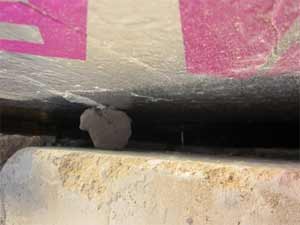
Mortar left in your cavity can give damp a direct route to your internal wall
Internal DPC bridging can also be an issue. This happens when debris and rubbish collect in a cavity void and build up to a level that is above the DPC (similar to the issue above but inside the cavity as opposed to being on the outside of the external wall).
The debris itself is usually created at the construction stage where the builder drops mortar down inside the cavity.
Additionally over a number of years rubbish such as birds’ nests, pieces of brick or stone, mortar etc. can build up and provide moisture with a direct path around the DPC and up into your wall to create damp and mould on your walls.
Mortar – Cracked and Broken Mortar Joints
The outer wall of your home is essentially its protective outer skin, fending off the elements and keeping you dry and warm inside. The potential weak points in this protective skin are (besides the bricks/blocks themselves) the mortar joints.
Over time, exposure to extremes of weather or movement of your property can cause these mortar joints can crack, creating gaps which provide moisture and cold air with a direct route into the cavity void.
As you may have guessed, if moisture is allowed into this area then it can penetrate through the inner cavity wall and on to the internal surfaces of your rooms, potentially causing damp and mould problems.
If cold air is allowed in also, this causes its problems. Cold air can cause parts of the internal wall to have a different temperature to the rest of the wall surrounding it. This is known as a cold spot.
In this instance condensation is likely to form when the warm moist air in your room touches the cold area on the internal wall. This results in black mould growth on your walls.
Cracked mortar can let damp enter your walls
Hygroscopic Salts – Moisture Attracting White Salts
This is a problem that is largely associated with areas around the chimney due to the minerals contained within fuels such as coal and wood, but can also occur anywhere.
Minerals are present in most building materials and when exposed to moisture and water for prolonged periods they can be washed out and appear as a salty white substance on your walls. This issue is also known as "Efflorescence"
If you are experiencing this then there is a good chance that you have a leak somewhere.
When present around a chimney they are usually accompanied by yellowy brown stains as some of the tars and deposits from inside the chimney are also drawn through.
You may also find that the salts seem more pronounced during periods of bad weather or high humidity.
This is because they are hygroscopic in nature (moisture attracting) and any moisture present within a room is attracted and absorbed by the salts, so the higher the moisture levels, the more salts are evident.
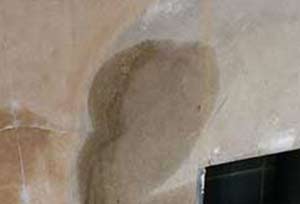
Hygroscopic salts can cause white staining and damp on your walls
Roof Tiles and Flashing – Broken Roof Tiles and Cracked Flashing
This as you may expect is quite a common source of leakage and water ingress as, like the walls of your home, the roof forms part of the outer protective skin of your home.
As with the cracked mortar issue with walls, once this skin is compromised by cracks in tiles or splits in flashing’s, water and moisture can access the inner areas and filter down through ceilings, run along joists and also run down into the cavity void and create damp spots on your walls.
The first job to do is check your roof for any damage. The best way to do this, is to hire or borrow a drone and camera or a decent pair of binoculars so that you can view your roof in detail from the ground.
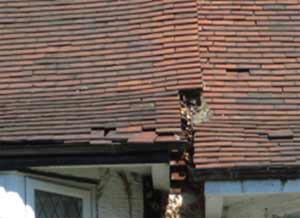
Inspect your roof for missing and broken tiles
Obviously it’s best to inspect your roof when you’re actually on it but special ladders and a whole host of safety issues come into play here.
If you have the necessary skills and knowledge to do this then go for it or if you have the funds available to pay for the services of a good roofer then this is a good choice, but in the absence of these, a drone or binoculars are the best option.
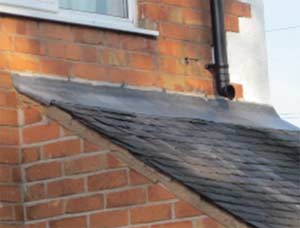
Look for broken flashing around your roof and chimney
Inspect every part of your roof and identify any damage or wear that may have occurred over the years. Make a note of where it is.
Once your inspection is complete refer to the damp and mouldy areas on the internal walls and trace back to the damaged area on the outside to see if the two matchup.
Also, get up into your loft space and perform a close inspection of the inside of the roof. Look for damage and any daylight showing, and also water and evidence of dripping water (stains, runs etc.).
If it looks like any damage you have found is not the root cause of the leak then you will have to look elsewhere, but at least you can tick this one off (if you did find damage to your roof, even if it looks like this is not the cause then you will still need to get it repaired as it could cause issues in the future).
Guttering – Leaks, Blocks etc.
If you have defective guttering this can also be a quite common cause of damp and black mould formation on internal walls.
Guttering is designed to channel excess rainwater away from your property to a suitable drainage point.
If the guttering fails, then rainwater can run down the outside walls of your home and over time with constant rainfall, a wall will suck water into it via capillary action.
Once the water has penetrated the outer cavity wall it can seep into inner walls, causing your damp and mouldy patches.
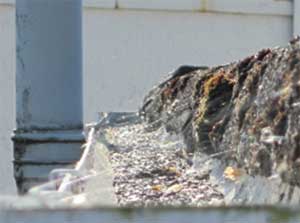
Blocked guttering can cause water to overflow onto your walls
The best time to check your guttering is when it’s working, so this does mean putting on a coat and going out in the rain.
Again using a drone with a camera or a decent pair of binoculars, inspect every joint between each guttering section, the stop ends and down pipes.
Also check all the supporting brackets to ensure that none are broken, as if they are then the weight of the water in heavy downpours can put too much weight on a joint and cause it to fail.
When doing your inspection, look for any water spilling over the edges (possible blockages), water dripping down from horizontal sections (possible joint failure, splits or cracks) and water running down the outside of down pipes (joint failure on the running outlet). Also check any 90 degree bends.
In some situations there is too much of a distance between downpipes and in heavy downpours the bend will act as a bit of a bottleneck where too much water is trying to get round it at the same time and will be forced over the edge.
Drainage – Poor Drainage, Sitting Water etc.
It’s one thing to channel excess and unwanted water and moisture away from your property but once you have done so you then have to ensure that it is draining away from your home correctly and not simply sitting there or saturating the ground, as in this situation you are leaving yourself open to a great many damp and mould problems.
If drains become blocked or ineffective then water will not drain correctly.
Check all of your drainage points inside and outside your house including overflows, sinks, toilet wastes, downpipe drains, shower and bath drainage, drainage pipes running through walls (internal to external), and look for weeping in joints, blockages, blocked grates, overflowing, splits, cracks and condensation.
Around these areas also look for evidence of leaks, puddles etc. and then trace them as far as you can to see where the water is going. You can find more information on how to test your drains for leaks in our Tracing Leaks project page.
Poor Ventilation
This isn’t obvious but quite a common cause of damp and mould nonetheless.
More often than not, damp and mould is caused by poor ventilation when there is a capped chimney, a blocked up fireplace or simply not enough vents in your walls or the fact that windows are not regularly opened.
When in use, a fireplace provides ventilation in a room and also ventilation for itself (the fire draws air up the chimney).
When you cap off a chimney stack or block up a fireplace without adding a vented chimney cowl or airbricks during the covering of the fireplace you are removing this ventilation.
When this ventilation is removed, cold air can become trapped in the chimney breast void and cause it to be at a different temperature to other walls of the room.
It can also keep that particular area of your wall at a different temperature when the rest of a room is warmer (e.g. when the heating comes on).
When this happens, moisture in the warm air in your room can condense on the colder area on the wall and create condensation, and, in most cases, mould.
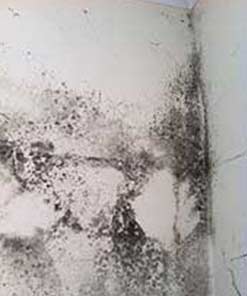
Black mould caused by poor ventilation
Other ventilation issues can include unwanted ventilation – gaps around windows and doors, cracks in walls, holes made by fixings such as hanging baskets, wall mounted cupboards, pipe fixings etc.
When this occurs, areas around the gap in the wall on the internal wall can be at a different temperature to the rest of the walls in the room.
This is known as a cold spot, and again this can cause condensation, damp and mould to appear on your walls. You can find out more about cold spots on our Cold and Damp Spots project page.
Outside chimney flues can also cause condensation. If you have a flue that runs up the outside wall of your property check the surrounding areas for evidence of damp and excess moisture (ensure the boiler is off before you do this!!)
Finally, it is recommended that you change the air in your home at least a few times a day, swapping the warm moist air for some nice clean air. If this isn’t done regularly enough then the moisture levels in the air can build to the point they cause condensation and then mould.
How to Fix Causes of Damp and Mould Issues
Now you are aware of the main problems that can cause damp and mould issues in your home it’s now time to take a look at how to fix them and then the damage that they cause.
Fixing Damp Proof Course Issues That Cause Damp and Mould
If you have a faulty or compromised DPC then to ensure no water and moisture can creap around it, it will need to be replaced or repaired.
Repairing/Replacing a DPC
The fix for this really depends on the cause. In the case that you do not have a DPC then it may be a good idea to install one.
You may be thinking that this sounds like a huge job and may be envisioning lifting your property up and installing a plastic sheet between brick courses.
In years gone by this may have been the only way but today there are quite a few products available that can allow you to inject a damp proof course instead.
There are quite a few available on the market and a simple online search will reveal most of them. Additionally, your local DIY store may also stock them. Although quite an involving job (and normally carried out by specialists) it can be done by anyone with a little DIY savvy.
If you have pinned the source of your damp wall problem and resulting mould problem down to the fact that your DPC is broken then the only real solution here is again to inject a new one. You can in some cases repair the damaged area but results are not guaranteed.
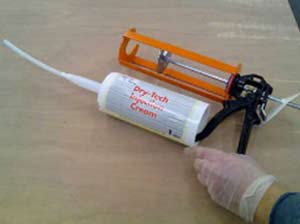
You can install a new DPC by injecting a Damp Proof Cream product
Bridged DPC in Cavity
When it comes to bridging of your DPC in the cavity, you guessed it, the only solution here is to remove the debris.
To do so you will have to remove one or two bricks from the external wall. This is quite easy to do but do not remove any more than two bricks.
If you need to remove more than two, then please first ask a reliable builder or a surveyor for expert advice.
Once you have removed your bricks inspect the cavity using a mobile phone or camera (with a light) to see if there are any obstructions.
If any are present then clear any debris in the cavity with your hands (make sure your wear some tough gloves as there may be sharp objects in there).
For items you cannot reach use a bar or scraper to drag them towards you. An old vacuum cleaner also comes in handy here for sucking up any fine items. Once all removed and the cavity is clear you can replace your bricks.
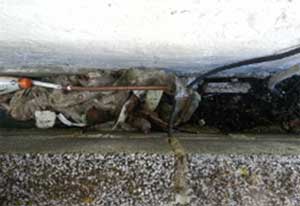
Remove any debris from your cavity to prevent water ingress into your walls that creates damp
Externally Bridged DPC
If you have identified external bridging as your problem then as in the case above it will need to be removed.
Dig back any soil, paths or garden areas if they are connected to your outside wall and their level is higher than the DPC.
You should aim to leave a decent gap between them and your external wall.
Also ensure that any water that may now collect is drained away correctly and will not simply sit there and cause further issues.
If you are unable to remove the obstruction e.g. it’s an extension, then you are really only left with one choice – inject a new DPC above the old one.
How to Fix Broken Mortar Issues That Cause Damp and Mould
The only fix for broken mortar joints is, you guessed it, to replace the damaged mortar by repointing.
Firstly you will have to rake out (carefully – do not damage or chip the bricks) the old mortar using a mortar rake for very loose items (minimum of 15mm, preferably 20mm) or a plugging chisel or bolster for the more stubborn bits, and then a wire brush for a thorough polish up.
With the joint cleaned of any remaining debris you can go ahead and repoint (information on this can be found in our Mortar Mixes project).
For full information and help on how to point and repoint brickwork, see our project here
How to Fix Hygroscopic Salt Issues That Cause Damp and Mould
The first thing to do is to trace and fix any leaks present. Once you have done this, you will need to remove any and all damp plaster from the affected area, right back to the wall’s surface behind, allow it to fully dry out and then treat the area with a salt neutraliser.
These can usually be purchased from most builders’ merchants or specialist damp proofing companies.
Where extreme salts are present, it may also be necessary to install a membrane over the top of the wall’s surface (once you have added your salt neutraliser). The membrane will prevent any further salts from penetrating your newly decorated surface.
Once any salt neutraliser has dried or your damp membrane has been installed, the damaged area can then be re-plastered.
Once the plaster has fully cured any finishing decoration e.g. wallpaper, paint etc. can be applied.
How to Fix Tile and Flashing Issues Causing Damp and Mould
In the event that you have found broken tiles and flashing and it looks like these are the source of your problems then these will obviously need to be sorted.
As we have mentioned several times, working on the roof can be dangerous so it may be best to locate a reliable roofer in your area and get the job done professionally.
If you do have the skills, safety knowledge and experience to do the job yourself then replacing your broken tiles can be relatively easy.
There are quite a few resources online with good instructions on how to replace and repair roof tiles, One good example of the principles of this is the Tile Roof Repair video by Russ Richards on YouTube.
Certain types of roof tile are fixed in different ways and also the age of certain properties will influence how tiles are fixed to the roof, so be aware of this, but the video does supply a good outline of what’s involved in most situations.
There are also certain glue/repair products available on the market that will allow you to repair cracks quite easily, but we have never used any of these so cannot comment on their success, as we tend to replace broken tiles – it’s definitely the best course of action.
When it comes to flashing obviously the best job is to replace any damaged sections, but if you factor in the cost of a roofer (if you can’t do it yourself) and then the price of lead then this can be expensive.
You can instead buy and use flashing repair tape that you simply stick over any splits and then seal the edges.
We have used a few of these (such as Sylglas) and have found them to be quite good and produce a good, effective waterproof seal.
You can find out how to repair your flashing using flashing tape in our Repairing Lead Flashing Project page.
How to Fix Guttering Issues Causing Damp and Mould
If you have identified any joint failure, splits or cracks then this will need to be sorted and the damaged sections replaced. This is a fairly easy job and information on this can be found in our Installing Plastic Gutters project page.
This will involve working at height – if you are not confident doing so then get a reliable professional in).
Where damaged and broken brackets are found these will also need to be replaced. You may also want to look at our ladder safety project.
If water is spilling over the side of guttering sections then, this is a good indication that there is a blockage. The only way to resolve this is to get up there and remove it.
Once the blockage has gone and as much debris has been removed as possible it is a good idea to wash the area down with a hose to clear it all thoroughly.
Where water is spilling over on a 90 degree bend then you may need to install another downpipe near the section.
Again this is a fairly easy job that involves removing a horizontal section, cutting out enough to fit a running outlet and then fitting a downpipe.
Ensure that all the joints are sealed correctly and also ensure that your new downpipe drains into an existing drain, as you don’t want this to drain into the ground and cause additional damp problems.
How to Fix Poor Drainage
If you find that any of your drainage points are not functioning or leaking then a fix is needed. Any split or broken items will need to be replaced and in most cases this is a fairly easy job, e.g. Replacing a Sink Waste.
In the event that you find damaged external drainage this could be a little trickier and may require the services of drainage professionals.
Condensation can also be a source of damp and mould. When checking all your pipework also take notice of any condensation that may be present on any cold feeds to taps and valves.
Condensation can collect and then run down pipework and onto walls, causing damp patches and possibly mould growth.
In this instance your pipework will need to be lagged and insulated. More information on condensation can be found in our Condensation project.
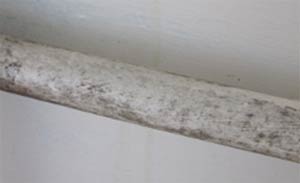
Black mould on cold water pipes caused by condensation
How to Fix Poor Ventilation That Causes Damp and Mould
Firstly check around your rooms for any signs of ventilation – do you have airbricks installed in your outside walls? Has your chimney been capped with no openings at the top of the chimney?
Check any bricked up fireplaces to make sure that air bricks have been installed in the fireplace area on your internal wall and also in your loft area to see if air bricks have been installed in the chimney breast.
If you cannot find any evidence of ventilation then some should be added.
An air brick should be inserted into your internal wall on the ground floor in the area where your fireplace is, roughly 300mm above floor level. This is to provide ventilation to your fireplace behind the wall.
If you have a void below your ground floor e.g., a floating timber floor, then the air bricks should be inserted here. Ensure that there is adequate ventilation in this area and that you have air bricks installed in external walls.
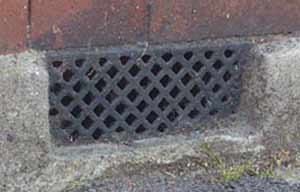
Insert air bricks or vents in your walls and chimney breast to provide ventilation and reduce damp
If your chimney is capped with no way for air to get in or out at the top, you need to add some ventilation here as well.
If there’s a chance you might use the chimney in the future, the best thing to do is to add a cowl in place of the cap.
This ensures that rain won’t enter your chimney but also means that when a prevailing wind strikes the cowl, that air is drawn up the chimney and out.
If you’re not planning on using the chimney again, a cheaper option is to remove the cap and the pot and to place a paving slab on top of the chimney stack, raising the slab up by two or three inches on all sides so that air can enter and exit the chimney.
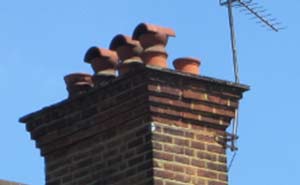
Adding cowls to chimney pots improves ventilation – reducing condensation in your living space
In the case of any unwanted gaps, these should be repaired correctly or filled.
Replace any rotting window sills or door frames and ensure they are correctly sealed all around the edge.
Repair any split or broken mortar by raking out the joints and replacing with new.
Also, check the affected area for fixings such as those mentioned above and remove them if possible. Once removed fill the hole with suitable sturdy filler (mortar if necessary or solid filler).
If the item cannot be removed (i.e. it’s a cupboard) then ensure that the fixing holes are totally sealed and air tight.
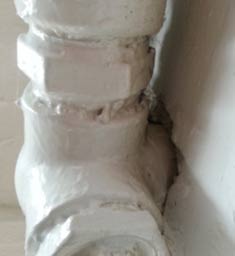
Fix any gaps in your walls with filler
It can be a little tricky to judge how effective additional ventilation will be, as if it is added unnecessarily then this itself can cause rooms to be cold and draughty, not only making them uncomfortable to be in but also possibly creating further cold, damp and mould issues.
If you are unsure about adding additional ventilation then it may be best to speak to a professional first. There are many damp specialists out there but make sure you do your research first and find a good one.
Repairing Damage Caused by Damp and Mould on Your Walls
For each issue outlined above we have suggested one or more fixes to resolve any associated damp and mould issues.
Below you will find information on how to repair the actual visual damage that has been caused by any damp and mould to your internal decoration, as well as suggested products that can be used to prevent re-occurrence of the issues.
What to do if Your Plaster is Structurally Sound
If the damp and mould present on a plastered wall surface was not left for long periods of time, once your plaster has dried out there is the chance that it will be okay.
Check the plaster to see if it is crumbling, split or cracked. If not, then you should be okay to redecorate over it without replacing it.
It may also be a good idea to apply some salt neutraliser to the plaster, just to prevent any possible future efflorescence issues.
As with most products in the building industry there are many, many available such as Mould Away, Polycell Mould Killer and also household cleaners such as Dettol Anti-Bacterial Mould and Mildew Remover, all with varying degrees of effectiveness.
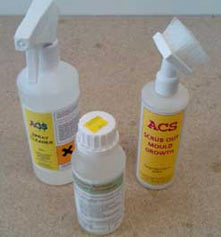
Remove the mould from your wall using mould cleaner before redecorating
You may also have salt deposits on your walls as discussed above. If they are Hygroscopic salts (indicated by white stains and damp patches that come and go) and your plaster is sound, you should apply salt neutraliser to the affected areas in much the same way as the mould cleaner.
Check that your mould remover and salt neutraliser are compatible with one another before applying them to the same surface.
The other kind of salt deposit that can appear on damp walls are simply known as ‘salts’ and appears as a result of water washing minerals out of the brickwork.
It presents as a fluffy, crunchy deposit that will easily blow your plaster. If you have these present then it is likely that you will have to strip your plaster away and replaster.
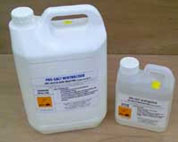
Use salt neutraliser to remove any salts on your wall before redecorating
What to do if Your Plaster’s Blown
In the event that the plaster has suffered exposure to damp on your walls for long periods of time then the chances are that it will be too far gone to be simply decorated over.
If it is split or cracked, crumbling away or if when you tap on it, it sounds hollow, then it has blown off of the wall’s surface below and the entire affected area will need to be removed.
Chip off all of the plaster from the affected wall area and also any damaged surrounding areas right back to the wall’s surface below.
If the bare wall has mould on it, clean this off first with mould remover as mentioned above – you can do this right away without waiting for the wall to dry if it’s damp.
If there were any salt deposits present in the plaster, you should also apply a salt neutraliser to the surface as mentioned above, either by painting it on or adding it to your plaster.
Some plasters also come with salt neutraliser already included. Read the instructions of both your salt neutraliser and your mould remover to make sure that they can be used together. It’s very unlikely that you will have problems but it’s best to check.
If you had a severe issue with salts, it’s a good idea to fit a mesh membrane on your wall’s surface before replastering. More information on how to do this is available on our Lining Damp Walls project page. When you have finished treating your wall, leave it to dry completely and then replaster it.
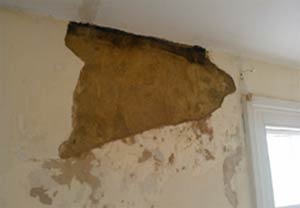
Strip any damp plaster away right back to the wall and leave it to dry out
Redecorating Your Wall After Plastering
When it comes to redecoration you have a few options. If all the damaged plaster and decorated surface has been completely removed and allowed to dry totally, the replaster has been completed to a high standard and you can confidently say that all the damp and mould affected areas are gone then no future evidence of the issues should be visible.
If you then want to make doubly sure you have covered all the bases, you might want to consider (if you are painting) an anti-mould paint as this will protect you from any future mould growth.
There are many available on the market and there’s always a good selection in most DIY stores but in all honesty some are okay and some are no good at all.
In respect to paint choices, if you are decorating in a kitchen or bathroom (high humidity areas) try to go for an oil based egg shell as it does not allow the absorption of moisture and water.
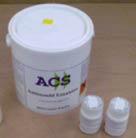
If you want to be totally sure that your wall mould won’t return you can use an anti-mould paint or paint additive
Dealing With Damp and Mould Marks and Stains
Stains and marks are an inevitable result of damp and mould on your walls as both issues can leave residual marks on the surface.
In the case that you do not replaster then you are leaving yourself open to the possible re-emergence of the mould (as the spores can remain in the plastered surface) if you do not treat the area with a suitable mould killer to ensure that all the spores are totally gone.
Once you have treated the wall with mould cleaner, you may be faced with mould-related stains and marks to deal with before you redecorate.
If in the past you have repainted over a damp area you may have experienced the problem of the outline of the damp patch still showing through (the boundary edges), this can be even more problematic with hygroscopic chimney salt problems where tars have been drawn through to internal walls (yellowy brownish stains).
You may have also found that no matter how many times you paint the area the boundary line still shows through.
To ensure that this problem is totally resolved the best course of action is to remove all the plaster from the area and replaster and redecorate.
Obviously there is a cost involved here and this may not be a practical option.
If not then there are a wide range of stain blocking primer paints available for damp and mould stained walls (as mentioned above).
You can paint or spray on a primer like this and it should stop any marks appearing on a newly decorated surface. Do make sure that you’ve allowed your wall to dry post-mould cleaning before applying it though.
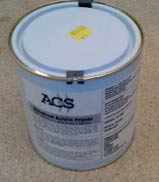
Use a stain-blocking primer to cover mould-related stains and prepare your wall for decorating
Dealing with damp and mould issues can be a real task as the causes can be vast, but once you have identified the problem, fixed it and then completed any finishing decoration, you shouldn’t be faced with any similar issues ever again.

 DIY Doctor Ltd,
  0845 6342 179


